


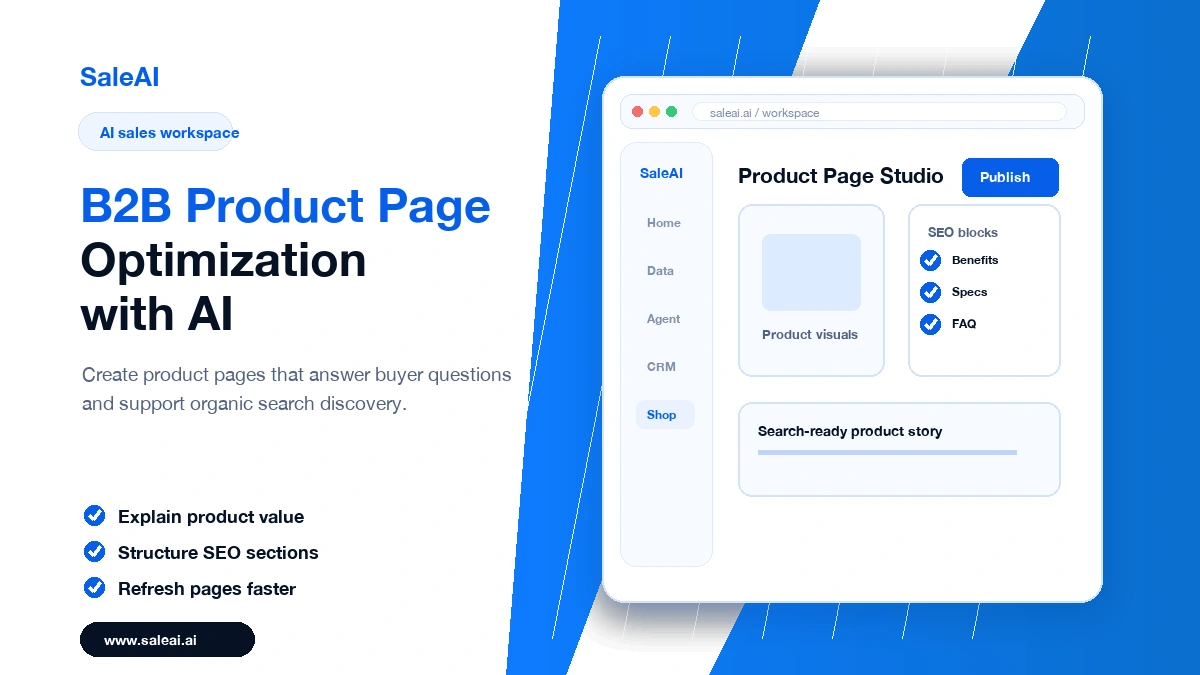
B2B product page optimization is not about making a product page longer. It is about making the page easier for a buyer to trust. Many B2B pages list specifications but do not explain how those specifications affect sourcing decisions.
SaleAI Shop can help teams turn raw product information into clearer page sections, SEO summaries, benefit explanations, and FAQs. The important part is to keep the content accurate. AI should improve structure and clarity, not invent claims.
Start with the buyer’s comparison process
A B2B buyer rarely reads a product page for entertainment. They compare. They look for material, size, certification, MOQ, lead time, customization options, packaging, and application fit. Good B2B product page optimization helps that comparison happen faster.
The top of the page should answer what the product is, who it is for, and what problem it solves. Deeper sections can explain specifications, use cases, and quote-stage details.
Separate facts from benefits
Specifications are facts. Benefits explain why those facts matter. A material grade might matter because it improves durability. A packaging option might matter because it reduces handling problems. A size range might matter because it supports different buyer applications.
- Use specifications for precision.
- Use benefits to connect the product to buyer outcomes.
- Use FAQs to answer sales questions before inquiry.
- Use internal links to guide buyers to related pages.
Use AI for structure, then verify
AI can help create meta descriptions, product summaries, FAQ drafts, comparison sections, and short benefit blocks. But every number, certification, material claim, and availability note should be checked by the team.
This matters because B2B product page optimization supports both search and sales. A page that ranks but creates inaccurate expectations will hurt the sales process later.
Let sales conversations improve the page
Questions from buyers are content clues. If several buyers ask about samples, add a sample section. If they ask about packaging, add a packaging FAQ. Connect those questions back into SaleAI CRM so the content team can update pages based on real conversations.
Strong product pages reduce friction before the first email. That is the real value of B2B product page optimization: buyers understand more before they ask, and reps spend less time repeating the same basic answers.
Build the product page from a content brief
Before using AI, create a short content brief. Include the product category, buyer type, main applications, available specifications, common questions, and claims that must not be made. This brief gives B2B product page optimization a reliable source of truth.
Without a brief, AI may overgeneralize. It might write attractive copy that does not match the actual product, or it may emphasize benefits that are not important to the target buyer. A structured brief keeps the output useful and reduces the editing burden.
What not to automate blindly
Do not automate certifications, performance numbers, warranty language, or compliance claims without review. These details affect buyer trust and may have legal or operational consequences. AI can improve wording, but it should not invent proof.
A better workflow is to let AI create the first structure: introduction, benefits, specifications, applications, FAQs, and meta description. Then the product or sales team verifies the facts. Finally, the page is connected to sales follow-up so buyer questions can improve the next revision.
In this way, B2B product page optimization becomes a living process. The page is not finished after publication. It improves whenever the team learns what buyers ask before they request a quote.
What buyers need before they ask for a quote
A strong B2B product page answers questions that are often hidden inside later emails: what the product is used for, which specifications matter, what can be customized, which documents are available, and what kind of buyer is a good fit. When that information is clear, sales teams receive fewer vague inquiries and more quote-ready conversations.
This is why B2B product page optimization should connect content with sales data. SaleAI can help identify which markets, buyer segments, and product angles deserve more detail, then turn those insights into page improvements that support both search visibility and human decision-making.
A practical page review rhythm
Review high-value product pages every month, especially before trade shows or seasonal sourcing periods. Look for repeated buyer questions, missing use cases, thin specification tables, and product descriptions that sound interchangeable. The goal is not to make the page longer. The goal is to make it easier for a purchasing manager to decide whether your offer deserves a conversation.
