


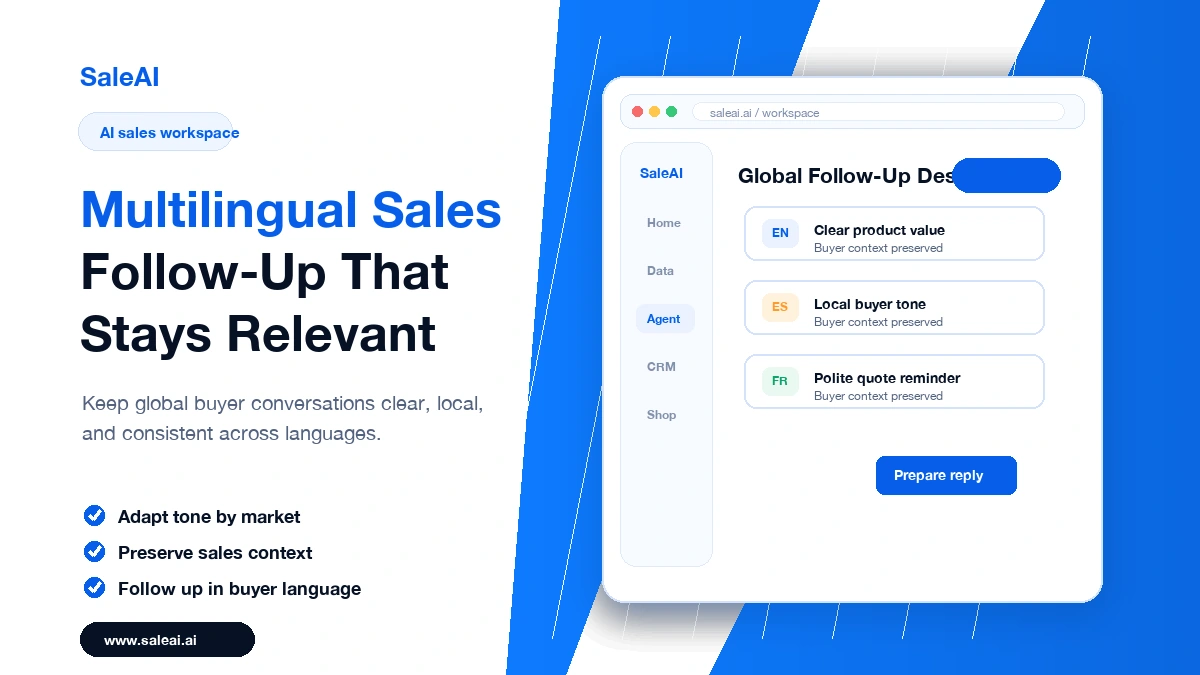
Multilingual follow-up is not just translation. A message can be grammatically correct and still feel awkward, vague, or disconnected from the buyer’s context. For global B2B sales teams, that difference matters.
A buyer may read a follow-up quickly between meetings. If the message is too generic, too pushy, or too unclear, the conversation can stall. AI can help teams write follow-ups faster, but the workflow needs more than a translation button.
Why Multilingual Follow-Up Is Difficult
Sales follow-up carries nuance. The message must remind the buyer of the previous conversation, add a useful reason to respond, and respect the buyer’s pace.
When teams work across languages, several problems appear:
- Reps may rely on literal translation
- Tone may not match the market
- Product details may become unclear
- Follow-up timing may be inconsistent
- CRM notes may not include enough context
The result is a message that is technically readable but commercially weak.
What AI Should Do in a Follow-Up Workflow
AI should help the salesperson keep the message clear, relevant, and consistent. It should not flatten every message into the same polite template.
A useful AI follow-up workflow includes:
- Buyer context from the CRM
- Summary of the previous interaction
- Reason for the next message
- Language and tone guidance
- Product or offer details
- Suggested next step
SaleAI CRM can help keep buyer context and follow-up actions connected. SaleAI Agent and content features can support drafting and workflow execution.
Start with Context, Not Language
Before choosing the language, clarify the situation.
Ask:
- Who is the buyer?
- What did they ask about?
- What is the last known status?
- What would be useful to them now?
- What action should they take next?
Once that context is clear, AI can help produce a more natural message in the target language.
Keep the Message Short but Specific
A multilingual follow-up should not be long unless the buyer requested detail. Short messages are easier to review and less likely to introduce translation errors.
A practical structure is:
- One sentence referencing the previous exchange
- One sentence adding useful information
- One clear question or next step
This structure works because it respects the buyer’s time.
Avoid Over-Polishing
Some AI-generated follow-ups sound too formal. Others sound too enthusiastic. In B2B sales, the safest tone is often clear, respectful, and specific.
Avoid phrases that could appear in any email. Replace them with buyer-specific context.
Instead of writing, “We hope to build a long-term cooperation,” explain why the product, timing, or information is relevant to the buyer’s request.
Use CRM Notes to Improve Follow-Up Quality
Good multilingual follow-up depends on good notes. If the CRM only says “sent catalog,” AI has little to work with. If the CRM says “buyer asked about MOQ, delivery to Chile, and sample cost,” the next message can be much sharper.
SaleAI CRM helps teams keep customer profiles and follow-up actions organized so each message starts from context rather than memory.
Human Review Still Matters
AI can draft, translate, and adjust tone, but people should review important messages. This is especially true when the message includes price, delivery dates, compliance details, or commitments.
The goal is faster, clearer follow-up, not careless automation.
FAQ
Q: Can AI write multilingual sales follow-ups? A: Yes. AI can help draft and adapt follow-ups in different languages, especially when it has buyer context and CRM notes.
Q: Is multilingual follow-up the same as translation? A: No. Translation changes language. Effective follow-up also adjusts tone, context, clarity, and next steps.
Q: How does SaleAI help global sales teams follow up? A: SaleAI can help organize buyer context, draft messages, support workflow actions, and keep follow-up tasks connected in the CRM.
