


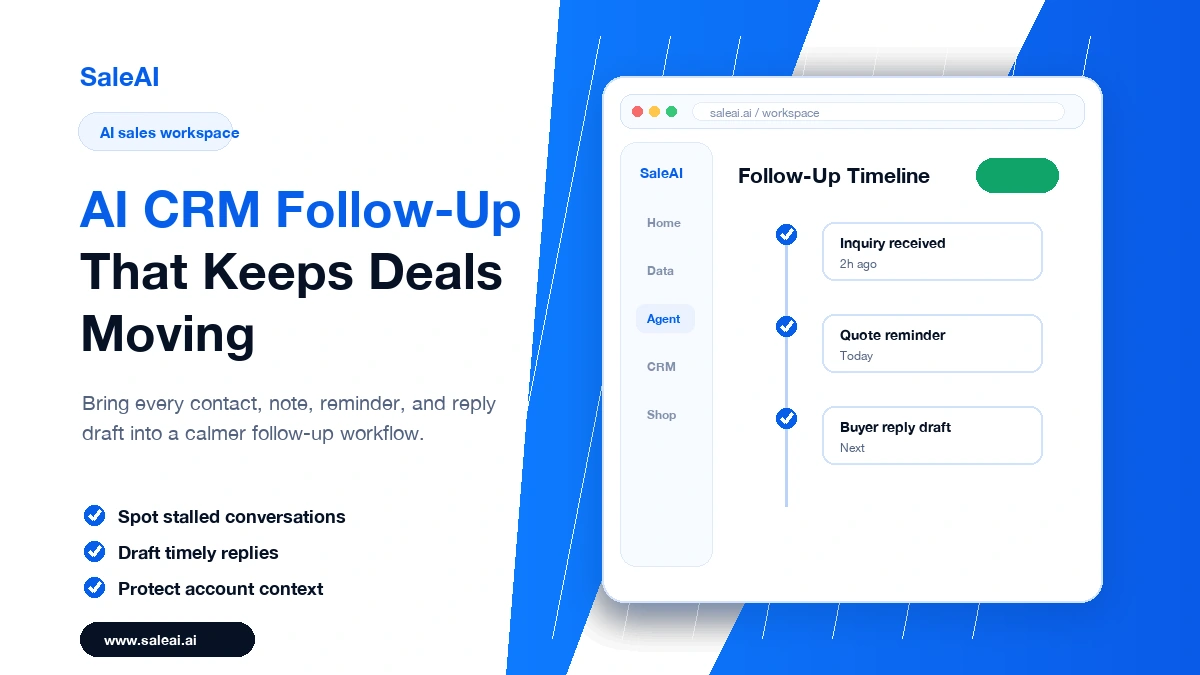
Many sales opportunities do not disappear because the product is wrong. They disappear because the next step is unclear, delayed, or forgotten. A prospect asks for details, a sales rep plans to reply later, and the conversation quietly loses momentum.
This is why AI CRM follow-up has become important for modern sales teams. A CRM should do more than store contact records. It should help teams understand customer context, suggest actions, prepare messages, and keep the sales process moving.
SaleAI CRM is part of a larger AI growth system that connects customer management with data, content, and agent execution.
What Is AI CRM Follow-Up?
AI CRM follow-up uses artificial intelligence to support the next steps after a customer interaction. This may include summarizing customer context, recommending a follow-up action, drafting a message, organizing contact information, or helping teams prioritize which opportunities need attention.
The purpose is simple: make follow-up easier, faster, and more consistent.
Why Follow-Up Breaks Down
Sales teams often struggle with follow-up for practical reasons:
- Customer information is scattered across tools.
- Reps are busy with new leads and active deals.
- CRM updates are manual and easy to delay.
- Outreach history is incomplete.
- Follow-up messages need personalization.
- Managers cannot easily see which opportunities are stalled.
AI can reduce these gaps by making the next action easier to identify and prepare.
What an AI CRM Should Help With
Unified Customer Profiles
A useful CRM should show key customer information in one place. This includes company details, communication history, interests, product needs, and deal status.
SaleAI CRM supports unified customer profiles so teams can understand the relationship before sending the next message.
Suggested Actions
AI can help identify what should happen next: send a quote, share a product page, ask a qualifying question, follow up on a previous email, or move a lead to a different stage.
Suggested actions reduce uncertainty and make pipeline management more consistent.
Follow-Up Message Drafts
Writing follow-up messages takes time because the tone and context matter. AI can help prepare a first draft based on customer status, product information, and the goal of the next conversation.
The best practice is to review and adjust the message before sending, especially for important accounts.
Better Handoff Between Teams
When sales, marketing, and operations teams share customer context, handoffs become easier. AI CRM workflows can help keep records cleaner and make the next step visible.
How AI CRM Connects With the Rest of the Sales Workflow
CRM follow-up is stronger when it is connected to other parts of the sales process.
SaleAI brings this together through:
- SaleAI Data for company and market intelligence.
- SaleAI Shop for product descriptions, SEO content, and sales materials.
- SaleAI Agent for executing web actions and workflow steps.
- SaleAI CRM for customer profiles, suggested actions, and follow-up messages.
This connection matters because a follow-up message is only as good as the context behind it. If the CRM knows the customer profile and the team has current product content, the next action becomes more useful.
Example: From Inquiry to Follow-Up
Imagine a potential distributor asks about product options. The sales team needs to review the company, prepare a response, share relevant product details, and set the next action.
With SaleAI, the team can use Data to understand the account, Shop to generate supporting product content, Agent to help with related browser tasks, and CRM to keep the conversation organized.
This workflow reduces the chance that the inquiry becomes a forgotten email thread.
Best Practices for AI CRM Follow-Up
Teams can improve results by following a few practical rules:
- Keep customer profiles accurate and current.
- Use AI-generated messages as drafts, not final decisions.
- Set clear next actions after every meaningful interaction.
- Prioritize follow-up based on deal fit and urgency.
- Review stalled opportunities regularly.
- Connect content, data, and CRM workflows instead of using them separately.
What to Avoid
AI CRM follow-up should not create generic messages that feel automated. It should not hide important customer context. It should not push every lead through the same sequence without regard for timing or fit.
The goal is better customer communication, not more noise.
Final Thoughts
AI CRM follow-up helps sales teams keep conversations active and organized. It supports the small but important actions that determine whether a lead becomes a real opportunity.
SaleAI CRM works as part of a broader AI growth platform, connecting customer management with company intelligence, content generation, and web task execution. For B2B teams, that connection can make follow-up more timely, relevant, and repeatable.
FAQ:
Q: What is AI CRM follow-up? A: AI CRM follow-up uses artificial intelligence to suggest next actions, draft messages, organize customer profiles, and help teams manage sales conversations more consistently.
Q: Does AI send follow-up messages automatically? A: It can help prepare messages, but teams should review important communications before sending, especially when customer relationships or public commitments are involved.
Q: How does SaleAI CRM support follow-up? A: SaleAI CRM supports customer profiles, suggested actions, and AI-assisted follow-up as part of a connected growth workflow with Data, Shop, and Agent.
