


At 11:40 PM, a buyer sends an RFQ.
The inquiry includes:
- product quantity
- packaging request
- target market
- shipping destination
The supplier sees the message the next morning.
Now the clock starts.
Many exporters lose momentum at this exact moment—not because of pricing, but because the RFQ reply takes too long or feels incomplete.
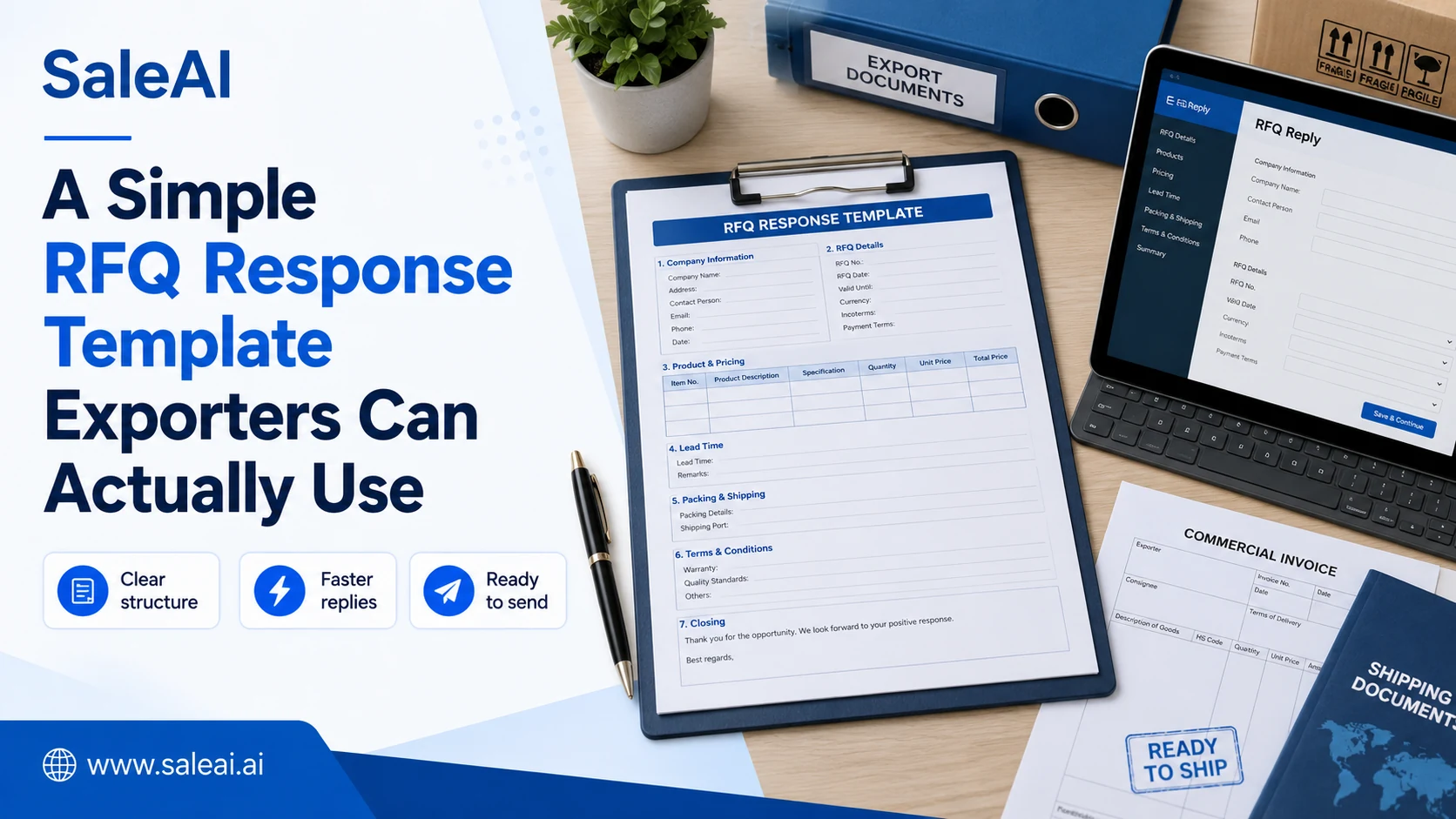
Instead of rewriting every response manually, it helps to use a structured RFQ response template that keeps replies fast, clear, and professional.
What Buyers Usually Expect in an RFQ Reply
Most importers do not expect a perfect quotation immediately.
But they do expect:
- confirmation that the inquiry was received
- clear product understanding
- estimated pricing or MOQ
- lead time expectations
- next-step communication
A weak reply creates uncertainty.
A structured reply creates confidence.
RFQ Response Template (Basic Version)
Here is a practical RFQ response template exporters can adapt for most B2B inquiries.
Example Template
Subject:
Re: RFQ for [Product Name]
Email:
Hi [Buyer Name],
Thank you for your inquiry regarding [Product Name].
Based on your requested quantity of [Quantity], here is the preliminary quotation information:
- Product: [Product Name]
- MOQ: [MOQ]
- Unit Price: [Price]
- Lead Time: [Lead Time]
- Shipping Term: FOB / CIF / EXW
- Payment Term: T/T or L/C
We also support:
- OEM customization
- logo printing
- packaging adjustment
Please let me know:
- your target market
- packaging preference
- required certifications
I can then prepare a detailed quotation and shipping estimate.
Best regards,
[Name]
[Company]
Why This Structure Works Better
This type of reply works because it is:
| Element | Why Buyers Like It |
|---|---|
| Short introduction | Saves reading time |
| Structured pricing info | Easy to compare |
| Clear next step | Keeps conversation moving |
| Export terms included | Reduces uncertainty |
| Customization mention | Adds flexibility |
Many exporters overcomplicate RFQ replies.
Buyers usually prefer clarity over excessive detail.
Common RFQ Reply Mistakes
Sending Only a Price
Price without MOQ, lead time, or shipping terms creates confusion.
Writing Long Factory Introductions
Buyers already contacted you for the product.
The first reply should focus on the RFQ itself.
Delayed Response Timing
Many buyers contact multiple suppliers simultaneously.
A slow reply often loses momentum immediately.
Missing Follow-Up
Some buyers do not reply because:
- they are comparing quotations
- internal approval is delayed
- specifications are still under discussion
RFQ workflows should always include follow-up planning.
A Better RFQ Workflow
Strong exporters usually follow this process:
- Receive inquiry
- Send first RFQ reply quickly
- Prepare detailed quotation
- Follow up after 3–5 days
- Revise pricing if necessary
- Discuss samples or shipping
The template is only the beginning.
The workflow matters more than the document itself.
How AI Helps With RFQ Responses
As inquiry volume grows, exporters often struggle with:
- repeated rewriting
- inconsistent formats
- forgotten follow-ups
- slow quotation preparation
AI tools help by:
- generating reply drafts
- organizing quotation fields
- standardizing export terms
- connecting follow-ups with CRM workflows
This reduces repetitive admin work across export sales teams.
How SaleAI Fits Into RFQ Workflows
SaleAI helps exporters structure RFQ replies, generate quotations, organize follow-up timing, and maintain buyer communication workflows.
Instead of manually rebuilding every inquiry response, teams can create more consistent RFQ handling processes across different buyers and markets.
A good RFQ response template is not just about formatting.
It helps exporters reply while buyer interest is still active.
